

Inside a spinning mill, air is a raw material. It carries the moisture that keeps cotton fibers flexible, it removes the heat that thousands of spindles produce every minute, and it collects the dust and fly that machines shed as they run. When the air stays where it should be, breakage rates stay low and shifts finish predictably. When it drifts, the cost appears in waste bins, in unplanned stoppages and in yarn quality that changes from one delivery to the next.
Tüfekçi Makine builds the equipment that keeps that air under control. The range covers four families: construction-type power plant equipment, package-type units, complementary machines and electrical automation hardware. They are designed to work as one connected circuit rather than as separate purchases, which is why the product catalog is arranged around where each unit sits in the system.
What follows is a practical walk through that range, written for people who need to decide what their plant actually requires.
How Air Moves Through a Textile Facility
The circuit starts at the intake. Air is drawn in, passed through filters, brought to temperature across a coil, then humidified to the level the process demands. From there it travels through ducts into the production hall, where it does its work around the machines.
The return side is where most problems hide. That same air comes back loaded with heat, fine dust and loose fiber, and all of it has to be separated before the air can be recirculated or discharged. A collection line sized for yesterday's machine park will struggle the moment three new cards are added, and the symptoms show up first as clogged filters and falling suction at the far end of the plant.
Because of this, our climate control products and our dust and fiber waste collection products are engineered together. Airflow, static pressure and moisture load are calculated for the specific hall, then equipment is matched to those figures. Standard packages rarely survive contact with a real building.
Construction-Type Power Plant Products
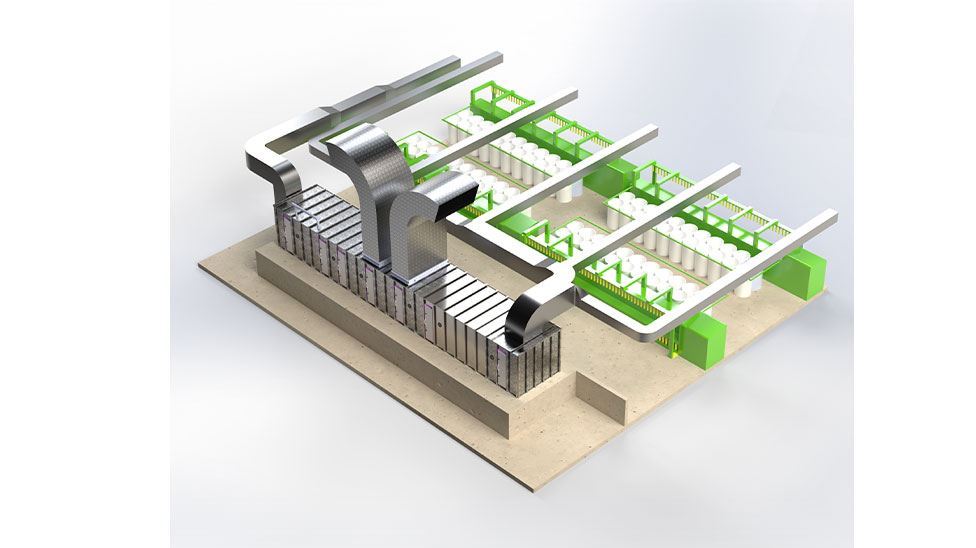
Construction-type plants are built on site, in a dedicated air conditioning room usually located beneath or beside the production floor. This remains the standard approach for large spinning, weaving and nonwoven facilities where air volumes are high and the building was planned with a plenum from the beginning.
The strength of this method is flexibility. Chamber dimensions, filter surface area, coil rows and fan positions can all be shaped around the available space and around the load the mill expects to carry in five years, not only today. Access panels and maintenance walkways go where technicians actually need them, which matters far more than it sounds when a coil has to be changed while the rest of the plant keeps running.
Our construction-type power plant products group covers both the air side and the waste side of these installations. For greenfield projects or for replacing a chamber system that has aged out, this is normally where the conversation starts.
Package-Type Power Plant Products
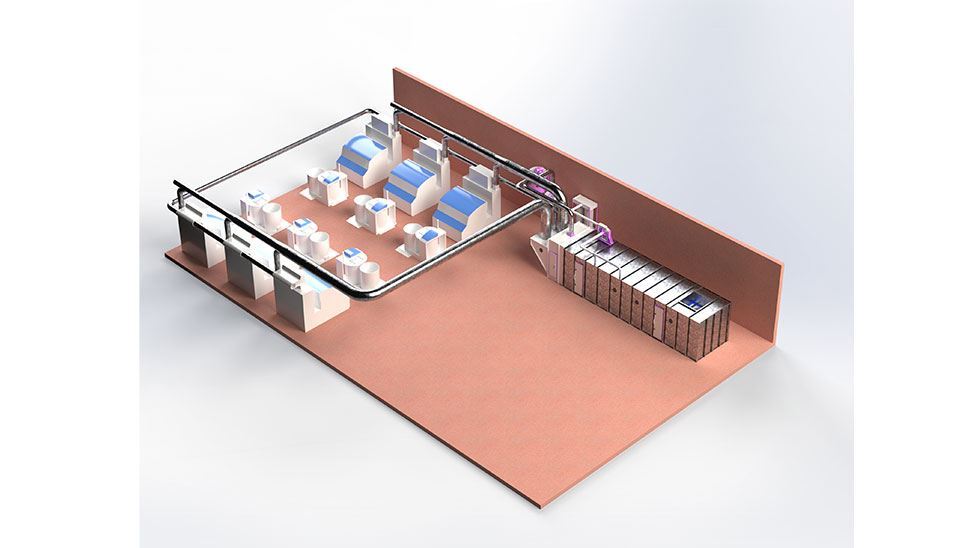
Not every facility has room for a full air conditioning chamber, and not every investor accepts a construction schedule measured in months. Package-type units answer that. They arrive as finished, factory-tested modules, get positioned, connected to ducting and power, and go into service.
Site assembly time drops sharply because the fan, filter section, coil and humidification stage are already mounted and aligned before shipment. Leak testing and vibration checks happen in the factory, so the commissioning team handles connections rather than construction work.
These units suit capacity expansions, plants working with tight floor space, and companies that need a second line producing quickly. The package-type power plant products family includes the packaged air handling unit along with filter units built on the same logic, such as the packaged rotary filter unit, the packaged pre-filter unit and the packaged mechanical filter unit.
Climate Control Equipment That Holds Conditions Steady
Cotton responds directly to the moisture around it. A few percentage points of relative humidity change how the fiber holds together, and that change lands straight in the breakage count and in yarn evenness. Climate control equipment exists to keep that variable flat across every hour of every shift, including the difficult ones in midsummer.
Each unit in this group handles one stage, and they are selected as a set so capacities and pressure losses line up:
- Heating and cooling coil: brings incoming air to the target temperature through hot or chilled water circuits.
- Humidification units: add moisture through nozzle systems and hold the hall at its setpoint throughout the day.
- Axial fan: moves large air volumes at low static pressure on supply and exhaust duty.
- Aluminum air damper: sets the balance between fresh and recirculated air as outdoor conditions change.
- Rotary filter: separates fiber and dust from return air using a continuously cleaned drum surface.
Sizing is where the engineering effort concentrates. A coil chosen one row short will meet its duty through spring and fail in August, and no control system can compensate for capacity that was never installed. Our team works from machine heat loads, operator numbers, building envelope and local climate data before proposing a configuration. The complete picture sits under textile air conditioning solutions.
Dust and Fiber Waste Collection
Fiber waste is not just a housekeeping matter. Loose dust works into bearings, blankets filter surfaces, raises fire risk and eventually forces stoppages nobody planned for. A properly designed collection line pulls that material away continuously and converts it into a compact, saleable by-product instead of a growing pile at the end of the hall.
The chain runs from suction at the machine, through fans and separation stages, to storage or compression:
- Pre-filter: catches coarse fiber before it reaches the finer stages.
- Dust collector: separates fine dust so clean air can return to the hall.
- Cyclone: drops material out of high-volume waste lines through centrifugal separation.
- Radial fan and dust fan: generate the suction the whole system depends on.
- Fiber conveying fan: carries collected fiber to the storage point without damaging it.
- Compactor and briquetting machine: press waste into dense bales or briquettes.
- Silo: stores the collected material until it leaves the plant.
The financial side often surprises people. Compressed waste occupies less storage space, costs less to transport and sells for more per ton than loose fiber, so the collection line recovers part of its own cost over time. System design details are covered under dust and lint collection solutions.
Complementary Machines for Specific Needs
Some requirements sit outside the main air and waste circuits yet affect production just as directly. The complementary group covers those, and each product answers a question that comes up repeatedly on the floor.
Fire safety is the clearest case. A metal fragment travelling through a blowroom line can strike a surface and throw a spark into dry fiber. The Alaz and Alaz+ metal and spark detectors sit in the duct, detect that event and divert it before it becomes something worse.
Quality control has its own equipment. The laboratory air conditioner holds test rooms at standard conditions so yarn measurements stay comparable from week to week, while the inspection machine supports fabric checking.
Beyond those, central vacuum systems handle plant-wide cleaning, fiber waste cleaning systems recover usable fiber from collected material, and the condenser separates air from transported waste. All of them appear under complementary solutions.
Electrical and Automation Products
Mechanical equipment performs only as well as the logic controlling it. Automation turns a collection of fans, coils and dampers into a system that reacts to outdoor temperature swings, changing machine loads and filter conditions without anyone adjusting a dial.
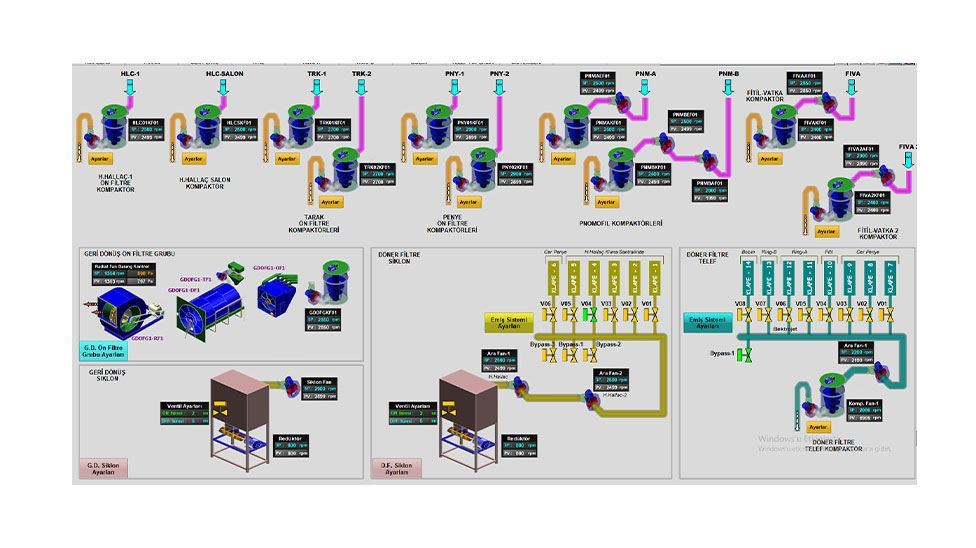
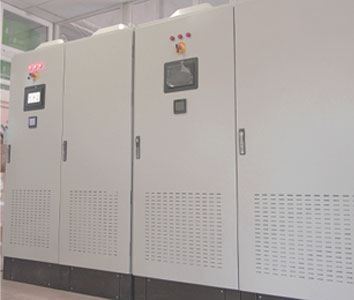
Central motor control panels manage motors across the facility, while automation panels and automation and software panels carry the control logic itself. Sensor groups feed live temperature, humidity and pressure readings into that logic, and panel-controlled systems carry out the commands.
Sitting above all of it, SCADA systems give plant managers one screen showing conditions in every hall, alarm history and energy trends. That visibility is where much of the saving comes from, because a fan running faster than necessary for eight hours a day stays invisible until someone measures it. More detail sits under electrical and automation solutions.
Deciding Where to Start
The right entry point depends on your situation. New facility projects usually begin with a construction-type plant shaped around the building. Expansions and retrofits lean toward package-type units because downtime is the binding constraint. Existing mills with climbing waste levels or unstable humidity generally need a review of the collection line and control system before anyone talks about new air handling capacity.
Whichever applies, the method on our side stays the same. We examine your machine park, hall dimensions, current air and waste figures and the climate you work in, then propose equipment sized to those numbers. Existing installations can be assessed through a service request, and completed projects in comparable facilities are available through a reference request.
Simply put, everything on this page belongs to one system and performs best when chosen together. Send your requirements through the quotation request form or reach the engineering team through the contact page, and we will work out the configuration your plant needs. For running installations, spare parts requests go through the same channel.
