



Air conditioning and dust collection systems form the backbone of a textile facility, but they rarely cover everything a production floor needs. Between the spinning frames, the weaving hall and the quality control room, there are gaps that standard climate or filtration equipment simply was not designed to handle. Complementary products fill exactly those gaps.
This category brings together six units that work alongside the main system: the Laboratory Air Conditioner, Alaz / Alaz+ metal and spark detectors, the Inspection Machine, Central Vacuum Systems, Fiber Waste Cleaning Systems and the Condenser. Each one solves a specific, recurring problem: unreliable lab measurements, fire risk from a stray metal particle, fabric faults reaching the customer, dust settling on machine surfaces, valuable fiber leaving the plant as waste, and uneven material feeding.
None of these units is decorative. In most facilities they are the difference between a plant that runs and a plant that runs profitably. Below you will find what each product does, where it belongs in the process, and how to decide which ones your facility actually needs.
What the Complementary Products Category Covers
Think of a textile plant as three layers. The first layer is climate: temperature, humidity and air movement across production halls. The second is waste handling: dust, lint and fiber leaving the machines and being collected, transported and pressed. The third layer is everything that supports and protects those two, and that is where complementary equipment sits.
Some of these products protect the main system. A spark detector, for example, exists because ducts full of fine fiber are an ideal path for fire. Others protect product quality, like the laboratory unit that holds testing conditions steady, or the inspection machine that catches defects while the roll is still in your hands.
A third group improves what happens to material already inside the plant. Fiber waste cleaning systems recover usable fiber from waste streams, and condensers separate fiber from the conveying air while feeding the next machine at a steady rate. These are process units as much as auxiliary units.
You can review the full engineering approach behind them on the Complementary Solutions page, where they are shown in the context of a complete plant layout.
Laboratory Air Conditioner: Reliable Testing Starts With Stable Air
Yarn strength, moisture regain and elongation results all shift with the surrounding air. Test the same cotton yarn on a humid afternoon and again on a dry morning, and the numbers will not match. That is not a measurement error; it is the fiber responding to its environment.
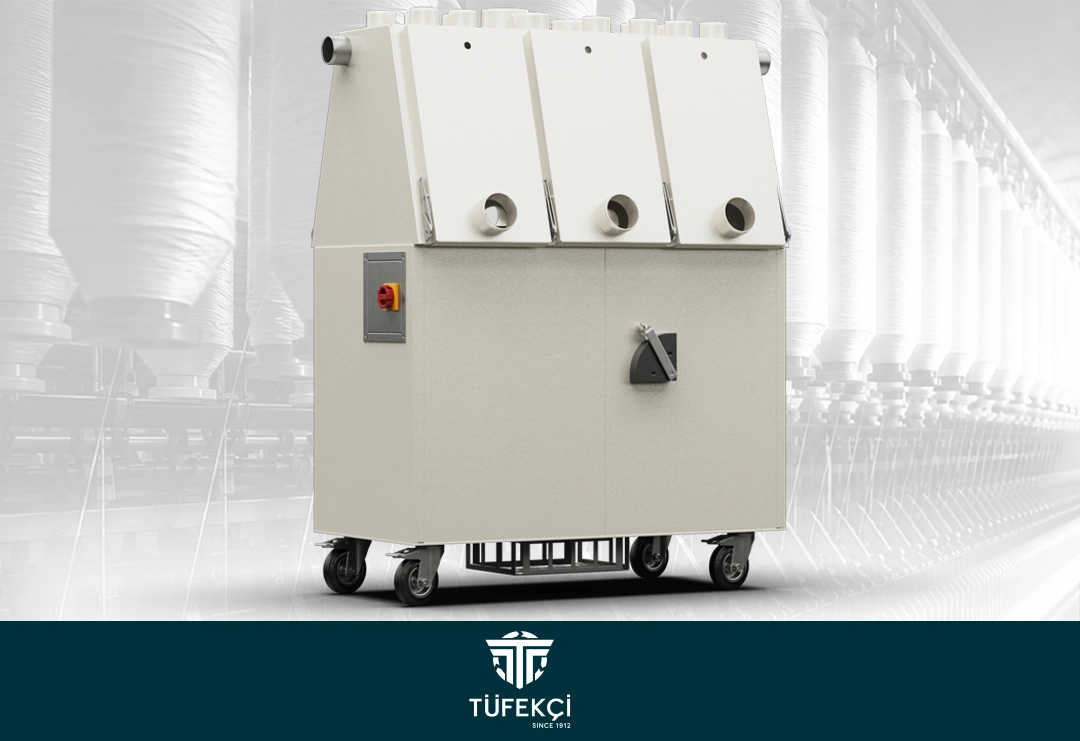
A laboratory air conditioner holds the test room at a fixed temperature and relative humidity so that every sample is measured under identical conditions. This matters most when results are shared with customers, used in claims resolution, or compared against supplier specifications. Consistent air makes the data defensible.
The unit works on the same principles as the plant's main climate system, with humidification, heating and cooling stages, but at a scale suited to a single room and with tighter control tolerances. It runs independently, so laboratory conditions stay steady even when production hall settings change through the day.
For facilities already using textile air conditioning solutions in production areas, adding a dedicated lab unit is usually a straightforward extension rather than a separate project.
Alaz and Alaz+: Stopping a Spark Before It Becomes a Fire
A single metal fragment travelling through a duct at speed can strike a wall, throw a spark, and set off a fire in a system packed with dry fiber. The whole event takes seconds. Detection has to happen faster than that, which is why spark and metal detection sits inside the line rather than around it.
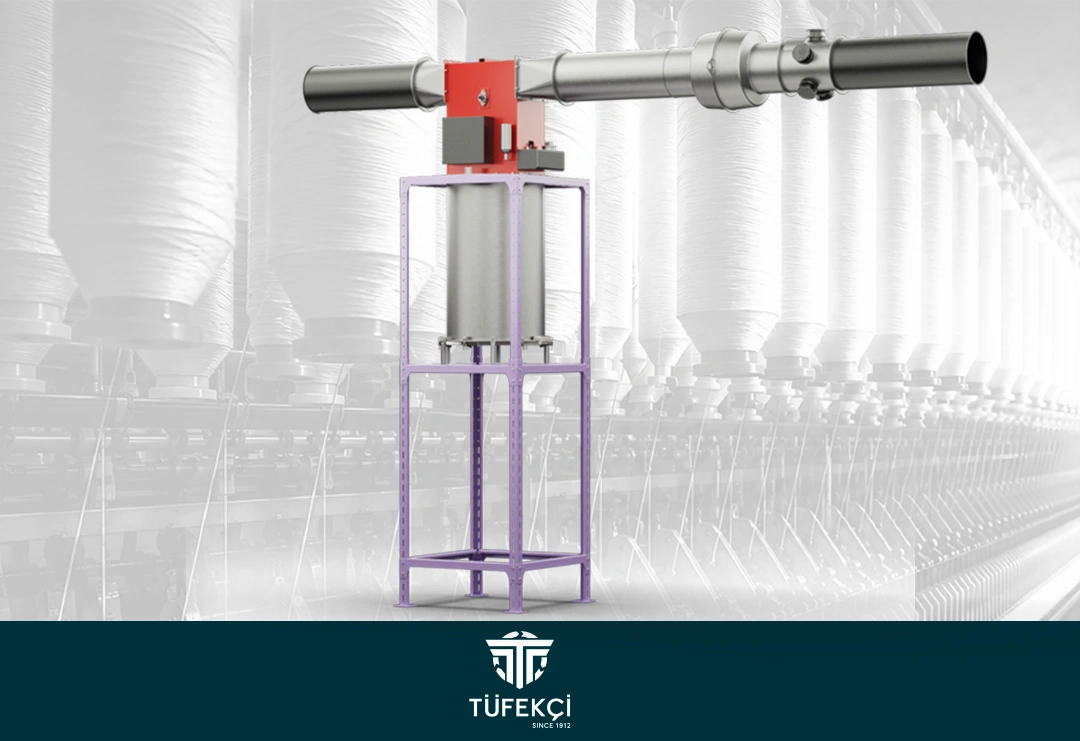
Alaz and Alaz+ scan the material flow and react the moment they identify a spark or a metal particle. Early detection means the risk is handled before it reaches the filter, the silo or the baling area, where the consequences would be far more expensive.
The practical benefits are easy to list:
- Detects sparks and metal particles early inside the production line, before they travel further
- Helps prevent fires and the equipment damage that follows them
- Reduces unplanned downtime caused by fire response and cleanup
- Protects filters, silos and pressing equipment that sit downstream
- Supports insurance and workplace safety requirements with active, continuous monitoring
Facilities running long duct networks feel this benefit the most. The more distance material covers between machines, the more opportunities exist for a foreign particle to enter, and the more valuable continuous monitoring becomes.
Inspection Machine: Finding Fabric Faults While You Can Still Act
Fabric faults do not disappear when they go unnoticed. They simply move down the chain until a customer finds them, and by then the cost includes shipping, rework, credit notes and a damaged relationship. Inspection at the source is far cheaper than any of that.
An inspection machine unwinds fabric at a controlled speed across an illuminated surface, giving operators a clear view of the full width. Defects such as broken picks, oil stains, weaving errors and color variations become visible in a way that they never are on a wound roll.
Beyond fault detection, the machine supports grading and record keeping. Faults can be marked and logged, rolls can be classified before dispatch, and the resulting data shows which machines or shifts produce recurring problems. That feedback loop is often more valuable than the individual defects found.
Central Vacuum Systems for Everyday Plant Cleaning
Dust settles regardless of how well a collection system performs. It gathers on machine frames, cable trays, walkways and window ledges, and if it is cleaned with compressed air, it simply becomes airborne again and lands somewhere else in the hall.
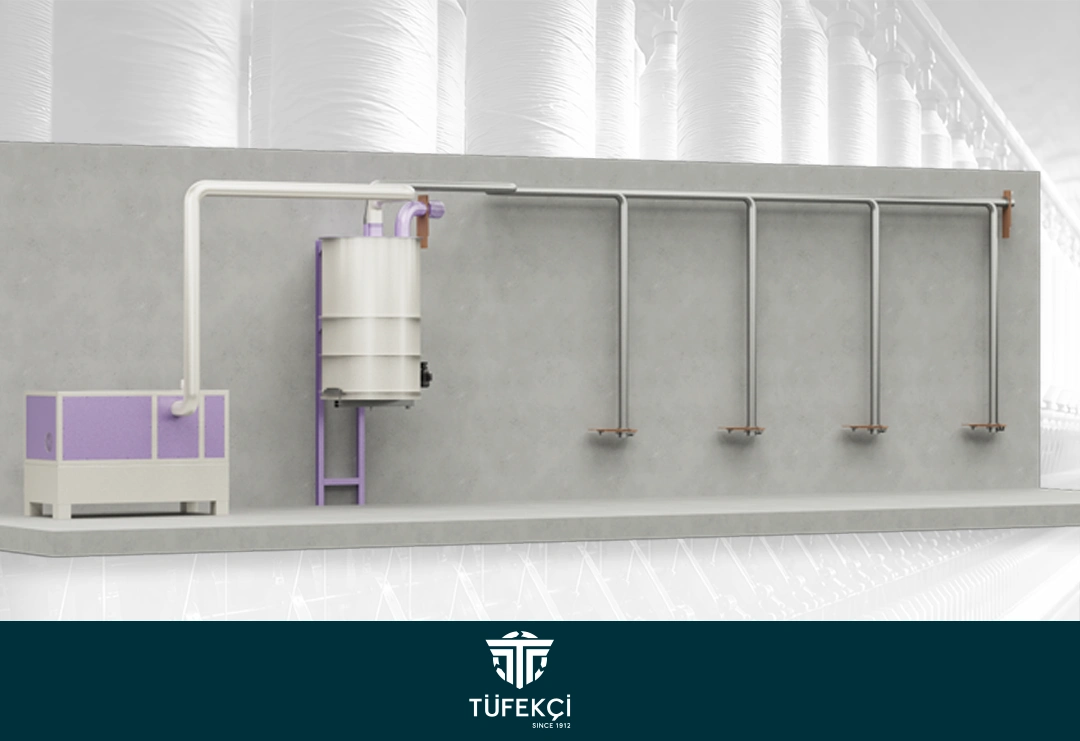
Central vacuum systems solve this by running fixed piping to vacuum points across the facility, connected to a central power unit. Operators plug in a hose at the nearest point and clean without dragging portable equipment around. The collected dust goes to a central container instead of back into the air.
The gain is visible in three places: cleaner machine surfaces and fewer quality problems from settled dust, a healthier working environment for operators, and less load on the main system, which no longer has to compensate for poor housekeeping.
Installation is usually planned alongside the main duct network, since both share routing decisions and structural supports. Coordinating them at the design stage saves considerable work later.
Fiber Waste Cleaning Systems: Recovering Value From Waste
Waste leaving a spinning or weaving plant is rarely pure waste. Mixed into it is a meaningful share of usable fiber, along with dust, short fibers and trash that make the material unsellable in its raw state. Sold as it comes, it fetches very little.
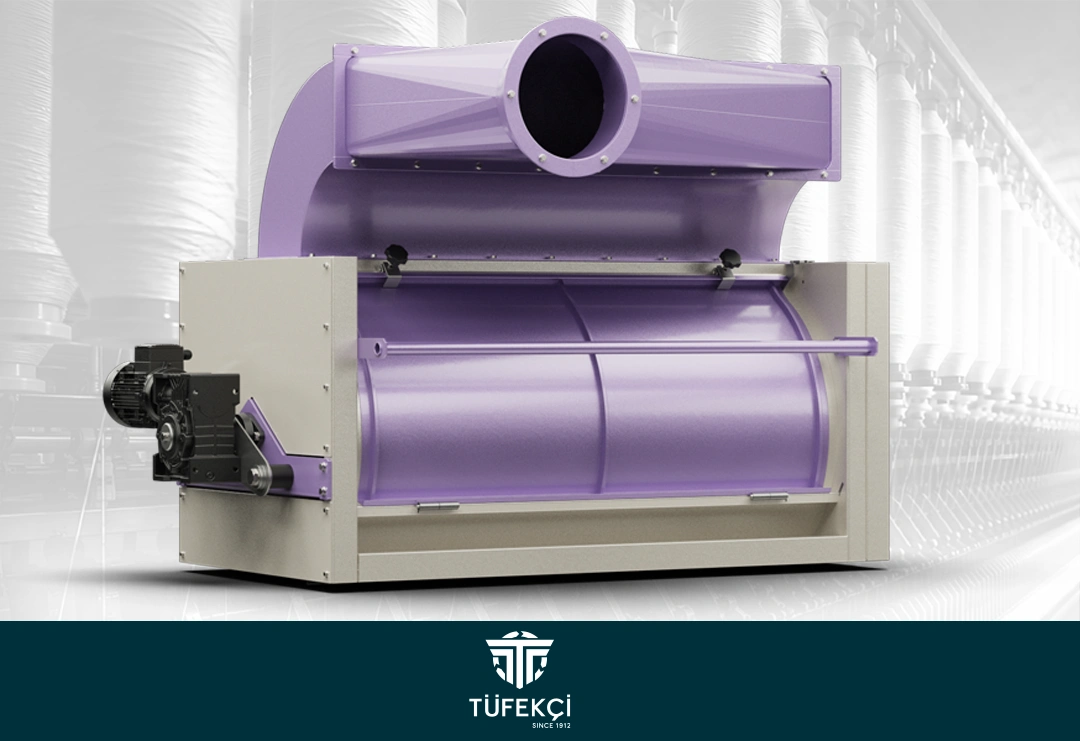
Fiber waste cleaning systems separate the usable fiber from contaminants through mechanical opening and cleaning stages. What comes out is cleaner, more uniform material that can be reused in production or sold at a considerably higher grade than untreated waste.
The financial case is direct. A plant generating several tonnes of waste per month usually finds that the difference in material value covers the investment within a reasonable period, and after that the recovery becomes continuous income rather than a cost.
There is also a sustainability dimension that increasingly appears in customer audits. Buyers now ask what happens to production waste, and a documented recovery process is a stronger answer than a disposal contract.
Condenser: Keeping Material Flow Steady
The condenser separates fiber from the air that carries it and feeds the next machine at a controlled rate. Without it, transported material arrives in surges, and the machine downstream deals with too much at one moment and too little at the next.
Regulated feeding matters because uneven input shows up later as uneven output. Weight variation, inconsistent thickness and quality fluctuations frequently trace back to feeding problems rather than to the machine itself.
While it transports fiber, the condenser also helps remove dust from the material, so what reaches the next stage is cleaner. This reduces the burden on downstream cleaning steps and keeps machine components free of buildup for longer.
Plants with several transport lines often use multiple condensers to keep each line independent, preventing a disturbance on one route from affecting the others.
How to Choose the Right Complementary Equipment
Selection rarely starts with a catalogue. It starts with a walk through the facility and an honest look at where losses actually occur. A few practical questions narrow things down quickly:
- Are your test results consistent? If lab numbers vary without an obvious cause, a laboratory air conditioner should be the first item on the list.
- How long are your duct runs? Extended transport distances and any history of fire incidents make spark and metal detection a priority rather than an option.
- Where are quality complaints coming from? If faults reach customers, an inspection machine pays for itself in returns avoided.
- How is cleaning handled today? Compressed air blowing is a strong sign that central vacuum lines are needed.
- What is your waste worth? Compare current waste revenue against cleaned fiber prices before deciding on a recovery system.
- Is feeding uniform? Weight variation at the machine output often points to condenser capacity or placement.
Capacity, layout and existing infrastructure all shape the final specification, which is why most projects begin with a site assessment rather than a product list. You can start that process through the Quotation Request Form or by getting in touch through the contact page.
Support After Installation
Equipment that runs continuously needs attention on a schedule. Filters clog, belts wear, sensors drift out of calibration, and each of those slowly reduces performance long before anything actually breaks down.
Planned maintenance keeps that decline from happening. Detection sensors need periodic verification, vacuum lines need inspection for blockages, and cleaning system components require checking against wear limits. A short annual intervention prevents most unplanned stoppages.
When something does need replacing, availability decides how long the line stays down. Requests can be made through the Service Request and Spare Parts Request pages, and units connected to electrical and automation systems can be monitored centrally so that faults are visible from the control room.
In short, complementary products are not extras added at the end of a project. They are the pieces that keep the main systems safe, the product consistent and the waste profitable. Browse the individual units above or explore the wider product range to see how they fit into a complete plant.
