

Every spinning, weaving and nonwoven line produces two things at the same time: yarn and waste. Short fibers, lint, seed fragments and fine dust leave the machines constantly, and if that load stays in the hall, it settles on rotors, blocks suction points and ends up in the yarn itself. The equipment in this category exists to capture that material at the source and carry it out of the production area before it becomes a quality or safety problem.
Tüfekçi Makine's dust and fiber waste collection range covers the full chain: pre-filters, rotary filters, radial and dust fans, fiber conveying fans, cyclones, dust collectors, compactors, briquetting machines and storage silos. Each unit handles one stage of the process, and they are engineered to work as a connected line rather than as separate purchases.
Below you will find what each group of equipment does, how the airflow moves between them, and which details matter when you are sizing a system for a specific mill. If you want the wider picture first, the dust and lint collection solutions page explains how these products are combined into complete installations.
Where These Systems Fit Inside a Textile Plant
Suction begins at the machine. Cards, draw frames, combers, ring frames, rotors and looms all have collection points connected to a duct network, and the air pulled from those points carries the fiber waste with it. The volume is significant: a mid-size spinning mill can move hundreds of thousands of cubic meters of air per hour through this network alone.
That air does not simply go outside. In most plants it is filtered, cleaned and returned to the production hall, because heating or cooling fresh outside air for a whole facility would be expensive. This is exactly where dust collection overlaps with textile air conditioning solutions, and why the two systems are usually designed together.
The waste itself follows a separate route. Once the fiber is separated from the air, it needs to be transported, compressed and stored until it leaves the site. A well-planned installation handles both routes without operators having to intervene during the shift.
The Path Dust and Fiber Take From Machine to Bale
Understanding the sequence makes equipment selection much easier. In a typical installation, the material moves through these stages:
- Collection at the source. Suction hoods and ducts pull lint and dust away from machines while production continues.
- Transport through the duct line. A fiber conveying fan or dust fan provides the pressure needed to move the loaded air.
- Coarse separation. A pre-filter removes heavy fiber and lint before the air reaches finer equipment.
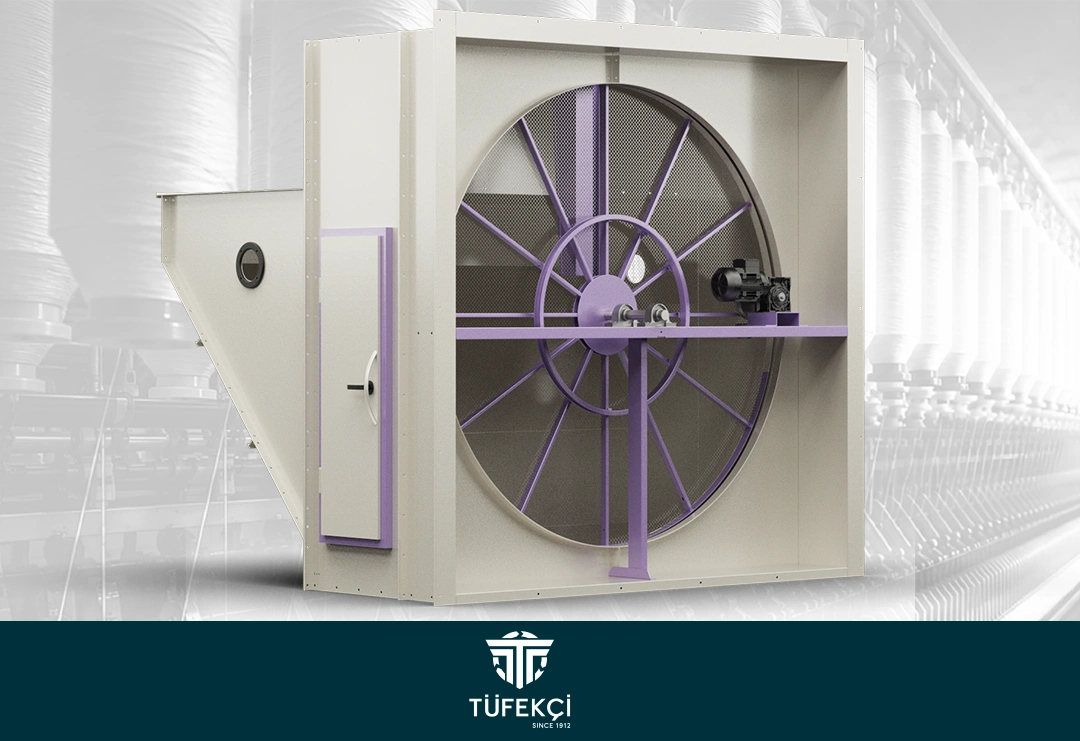
- Fine filtration. The rotary filter captures the remaining dust with its continuously cleaned drum surface.
- Waste separation and discharge. A cyclone or dust collector drops the collected material into the handling line.
- Compression and storage. A compactor or briquetting machine reduces volume, and a silo holds the output until collection.
Skipping a stage rarely saves money. A missing pre-filter, for example, sends heavy lint straight to fine filtration, which shortens cleaning intervals and increases pressure drop across the whole line.
Filtration Units That Separate Fiber From the Air Stream
The pre-filter is the first defense. It takes out the bulk of the fiber before the air continues, which protects downstream units and keeps the fine filtration surface working under a reasonable load. In plants where waste volume changes between shifts, this buffer effect is what keeps performance stable.
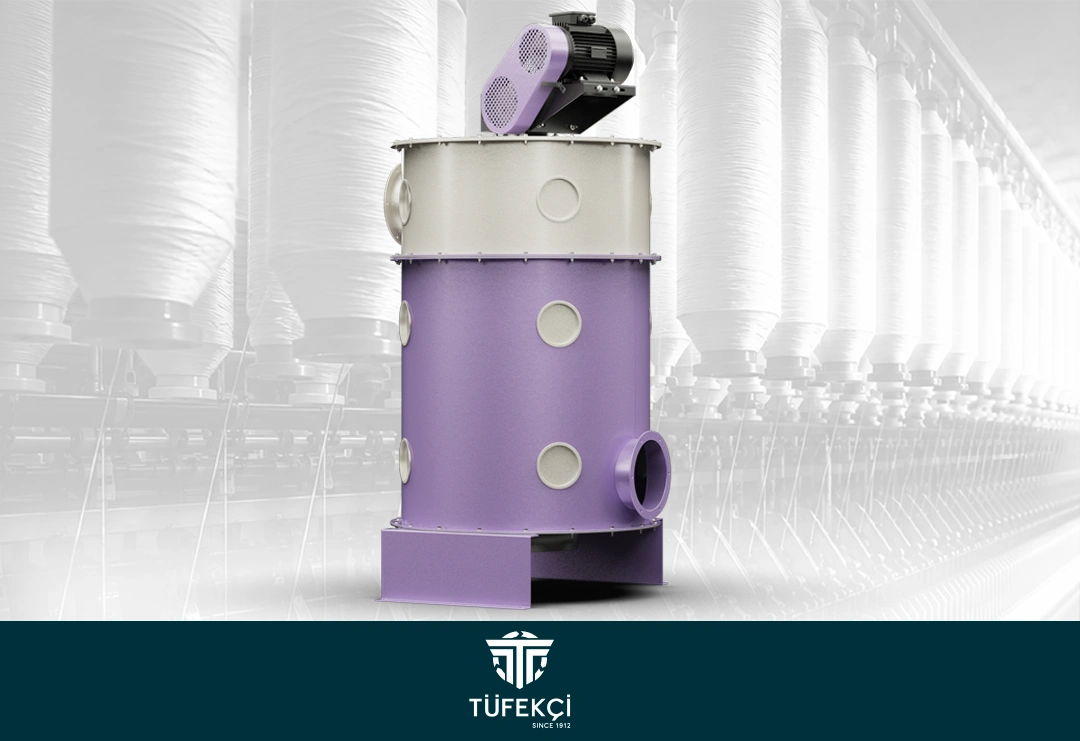
Rotary filters handle the finer fraction. The rotating drum surface is cleaned continuously by a suction arm, so the filtration area stays open instead of gradually clogging. This design allows steady airflow over long periods, which matters when the same air is being conditioned and returned to the hall.
For facilities that need a faster installation, the same functions are available as ready-built modules. The packaged pre-filter unit, packaged rotary filter unit and packaged mechanical filter unit arrive assembled and tested, which shortens commissioning time on site.
Fans and Conveying Equipment That Carry the Load
Fans are the part of the system operators think about least and pay for the most. Since they run continuously, a few percentage points of efficiency turn into a visible line on the electricity bill by the end of the year. Impeller design, balancing quality and correct sizing therefore have a direct financial effect.
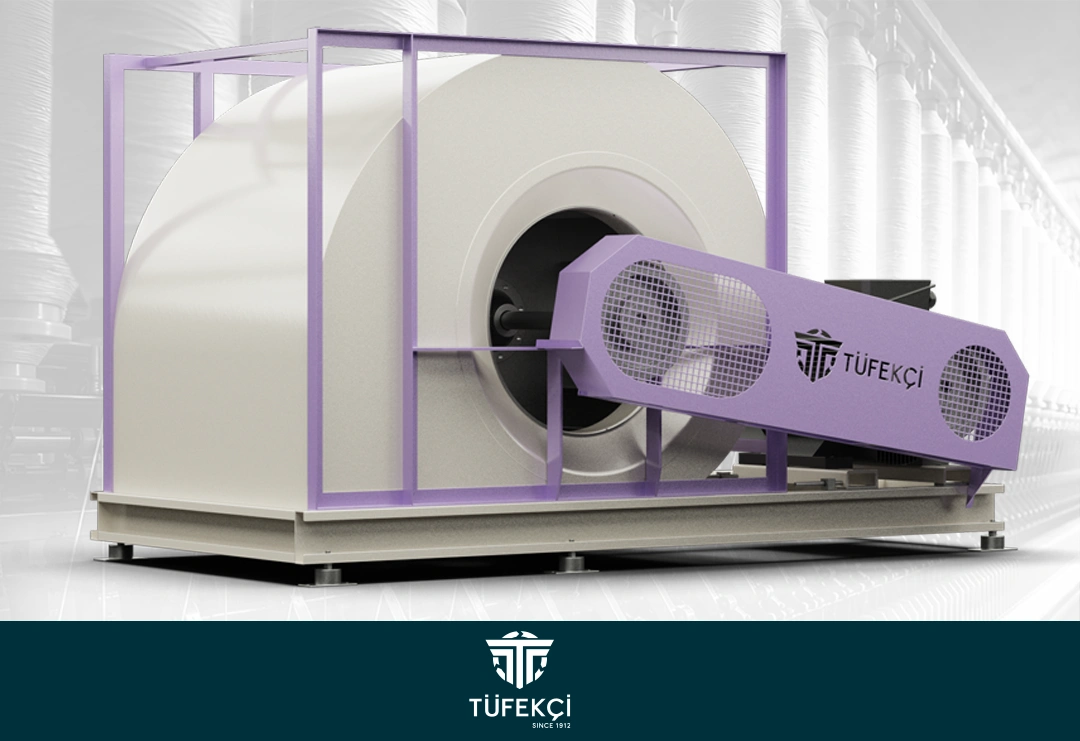
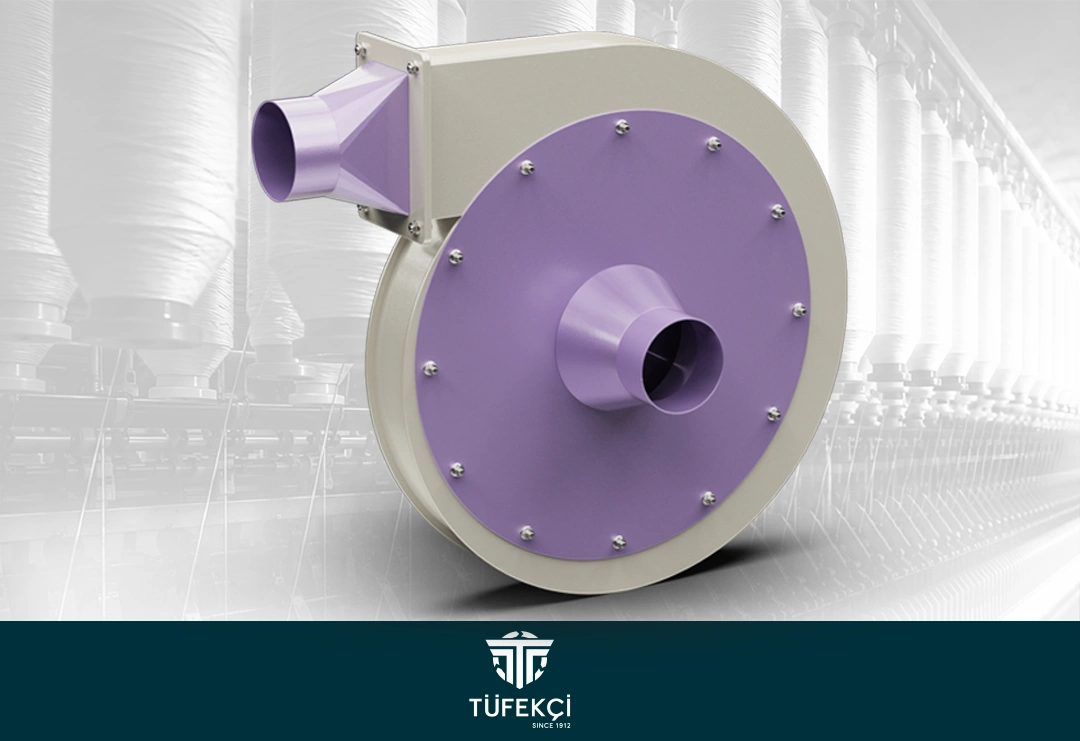
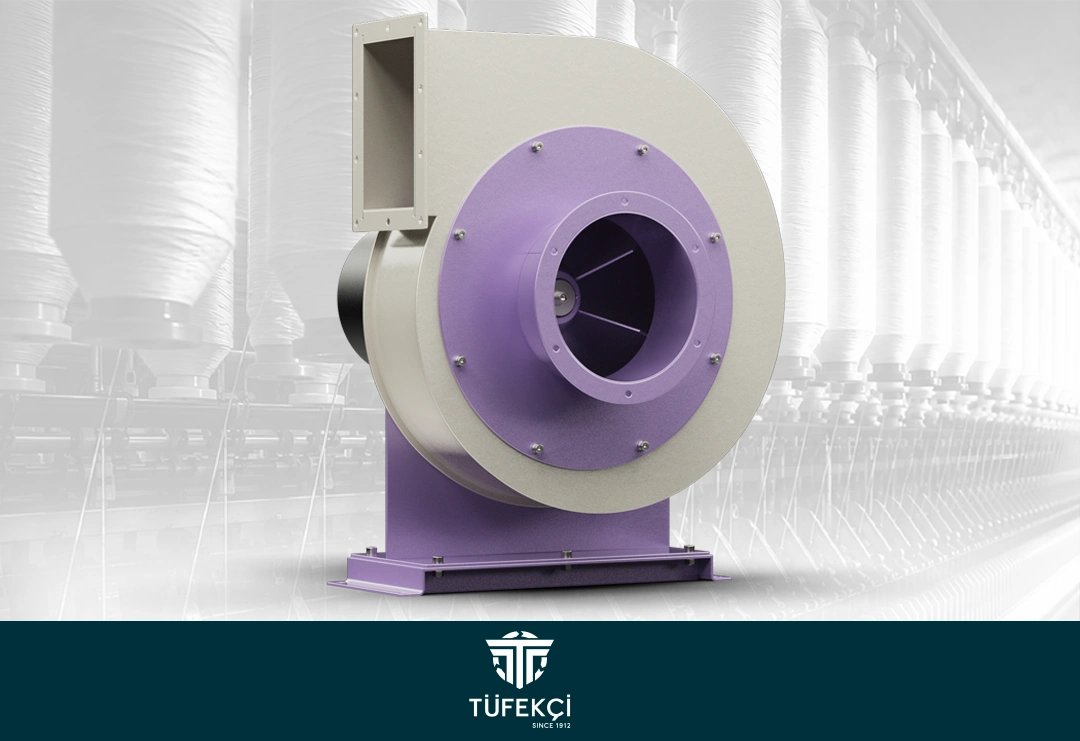
Radial fans are used where high static pressure is needed, typically on long duct runs with several branches and filtration stages. Their construction allows them to work with air that still carries particles, without losing performance over time.
Dust fans and fiber conveying fans serve more specific duties. Dust fans move fine particle loads through the filtration line, while fiber conveying fans are built to transport bulkier lint toward the collection and pressing equipment without blockages inside the housing.
When these fans are managed through variable speed control, the system can follow actual production instead of running at full capacity all day. The electrical and automation solutions range, including SCADA systems, makes that kind of adjustment possible from a single screen.
Cyclone and Dust Collector Working Side by Side
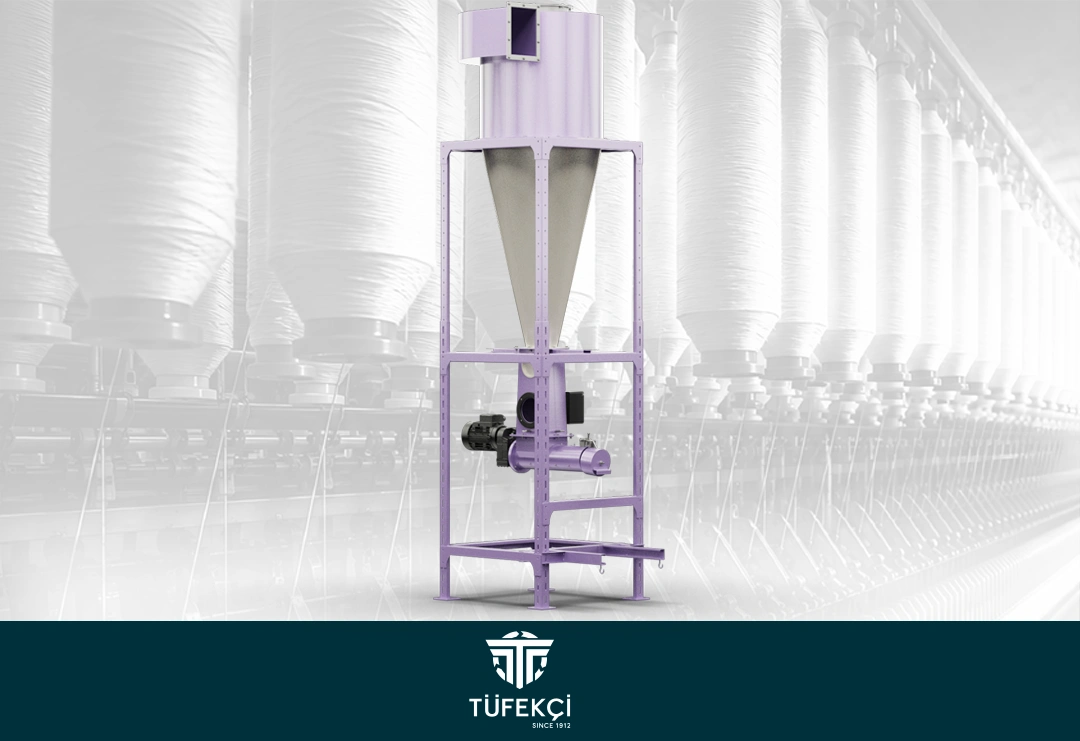
A cyclone separates material using motion rather than a filter surface. Air enters tangentially, spins downward, and the heavier particles are thrown to the wall and fall into the discharge outlet while cleaned air rises through the center. There is nothing to replace inside, which is why cyclones are popular in plants where maintenance windows are short.
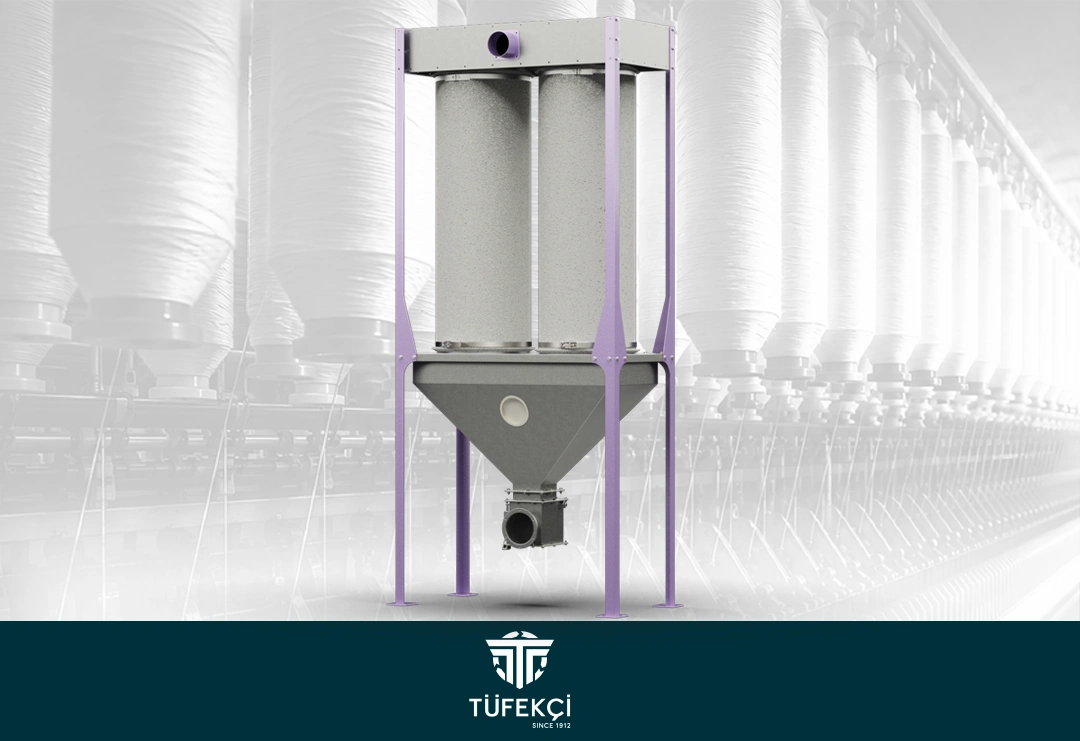
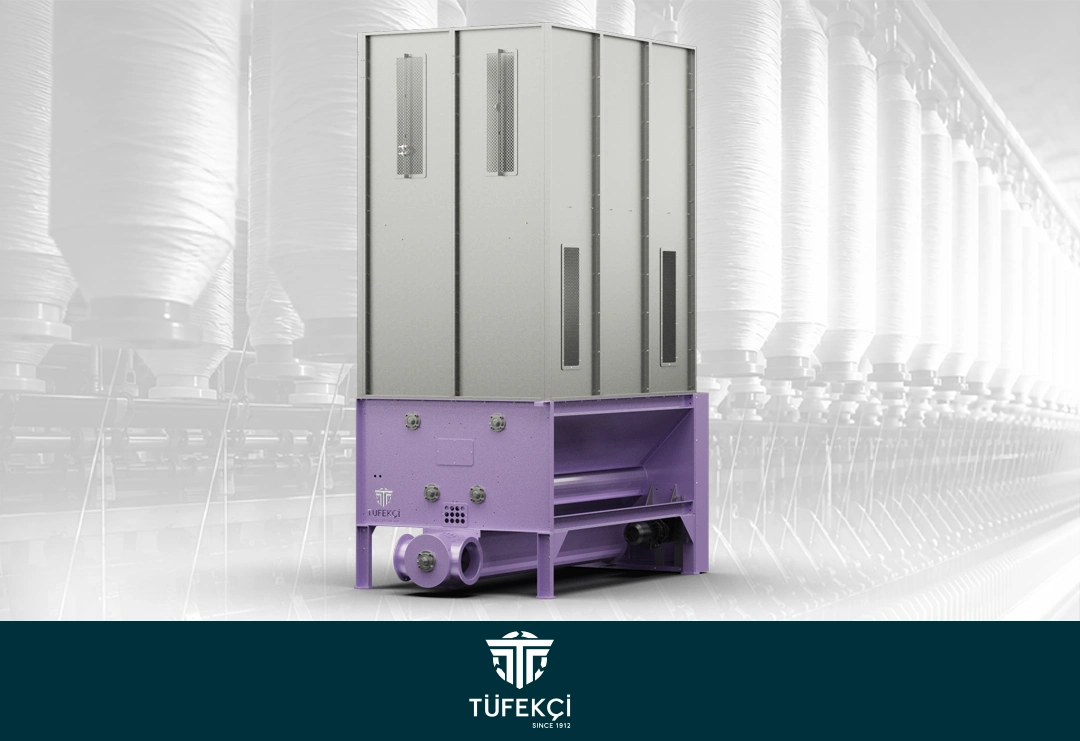
Dust collectors work on a different principle and catch the finer fraction that a cyclone lets through. Placing them after the cyclone gives you the best of both: the bulk of the load is removed mechanically, and only the light remainder reaches the filter media.
Fire risk deserves attention here, because compressed fiber and a single spark are a dangerous combination. The Alaz metal and spark detector monitors the duct line and reacts before an ignition source reaches the collection equipment.
Compactor, Briquetting Machine and Silo: Where Waste Gains Value
Loose fiber waste is mostly air. Transporting it in that state means paying for volume rather than material, and it fills storage space that the plant usually needs for something else. Compression is what turns a disposal cost into a manageable, and often sellable, output.
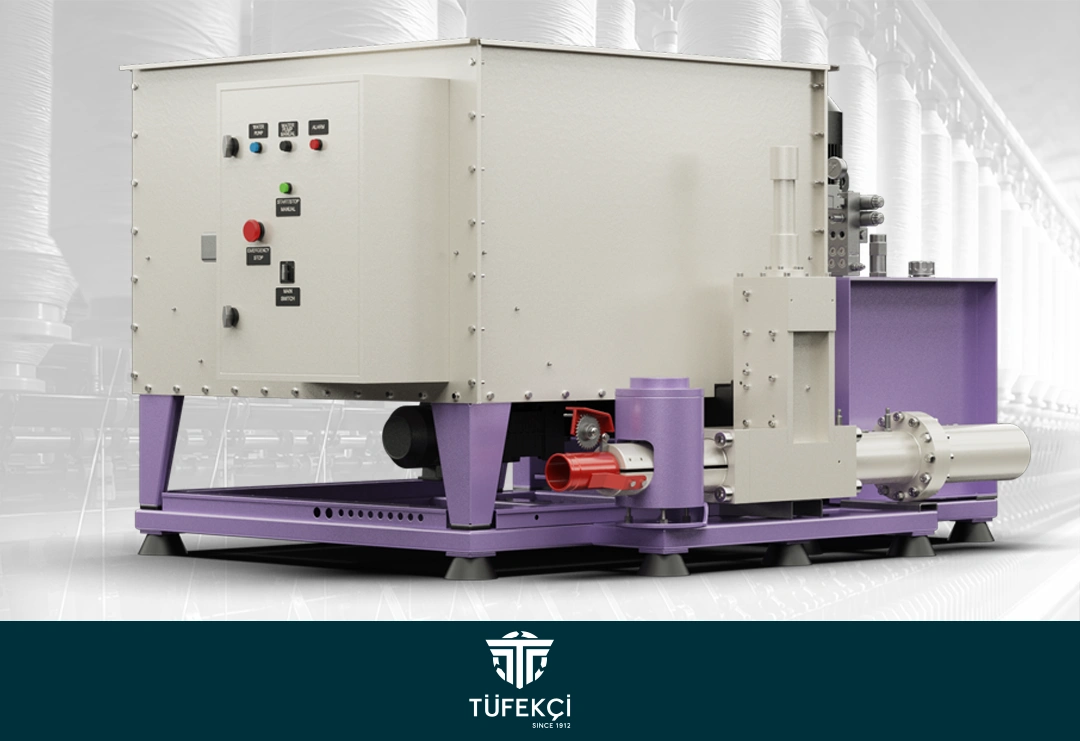
Compactors press the collected waste into dense bales with consistent dimensions, making handling with a forklift straightforward. Briquetting machines go further and form compact blocks, which is particularly useful when the waste has a recycling or energy value at its destination.
Silos close the loop by storing material between production and collection. Sized correctly, a silo lets the plant run a full week without anyone stopping to empty bins, and it keeps the waste out of walkways and machine areas.
For mills that want to recover reusable fiber instead of selling everything as waste, fiber waste cleaning systems separate usable material from contaminants and return it to the process.
What to Check Before Choosing a Configuration
No two mills produce the same waste profile, so the correct system depends on measured conditions rather than a standard catalog set. These are the points that shape the design:
- Airflow volume and static pressure required by the existing duct network
- Waste characteristics, since cotton lint, synthetic fiber and blended waste behave differently during transport and pressing
- Available floor space and building height, which often decide between a construction-type and a packaged installation
- Return air strategy, meaning whether conditioned air goes back to the hall or is discharged
- Shift pattern and maintenance windows, which determine how much automatic cleaning capability you need
- Future capacity, because adding machines later is far cheaper when the duct and fan capacity was planned for it
Sharing these details early leads to a far more accurate proposal than a general request. You can find the complete equipment range on the our products page while preparing your requirements.
Support, Spare Parts and Project Requests
Tüfekçi Makine designs, manufactures and installs these systems as complete projects rather than individual machines. Engineering starts with your plant layout and production plan, and continues through installation, commissioning and operator training.
Once a system is running, keeping it running is mostly a matter of scheduled attention. Filter surfaces, fan bearings and pressing units all have predictable service intervals, and following them prevents the gradual performance loss that many plants only notice when yarn quality drops. The service request and spare parts request forms exist for exactly this reason.
In short, if you are planning a new line, replacing aging equipment or trying to solve a specific dust problem in an existing hall, the fastest route is a technical conversation about your actual conditions. Send your requirements through the quotation request form, ask for installation examples from similar mills via the reference request page, or reach the engineering team directly through contact us.
