

Packaged dust and fiber waste collection units are complete filtration systems delivered as a single, factory-assembled body instead of separate components built on site. In textile production, they handle the fiber, lint and dust load released by yarn, weaving and knitting machines, and they keep that load out of the air your operators breathe and out of the equipment you depend on.
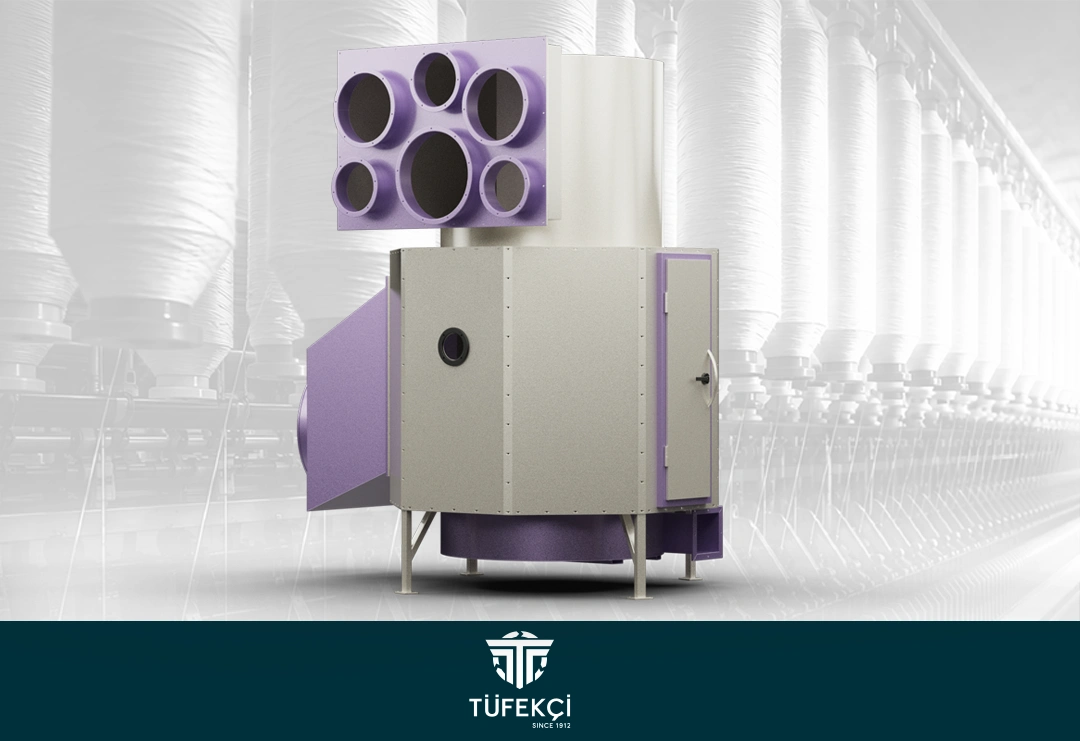
Under this category, Tüfekçi Makine offers three units: the Packaged Pre-Filter Unit, the Packaged Rotary Filter Unit and the Packaged Mechanical Filter Unit. Each one covers a different point in the filtration chain, from the first coarse capture stage to continuous high-capacity separation.
The reason mills choose the packaged route is usually practical. The unit arrives ready to connect, the footprint is known in advance, and commissioning takes days rather than weeks. For a plant that cannot afford long shutdowns or does not have room for a full construction-type filtration room, that difference matters more than any specification sheet.
What These Units Actually Handle Inside a Mill
Every spinning, weaving or knitting hall produces fiber fly and fine dust as a by-product of the process itself. Left uncontrolled, that material settles on machine surfaces, blocks cooling openings, mixes into the product and slowly turns into a fire risk near motors and electrical panels.
A packaged collection unit pulls this contaminated air out of the production area, separates the solid load from the airflow, and returns clean air to the hall or sends it forward to the air conditioning side. The captured fiber is then moved on for compacting, storage or reuse rather than being scattered back into the environment.
The second job is protection. Filter surfaces inside air handling equipment, humidification sections and heating coils lose performance quickly when raw production air reaches them. A properly sized collection unit keeps that load away, which is why these systems are usually the first stage anyone designs when planning dust and lint collection solutions.
There is also a measurable production benefit. Machines running in cleaner air need fewer manual cleaning stops, hold their settings longer, and produce fewer quality complaints tied to contamination on the yarn or fabric surface.
Packaged Pre-Filter Unit: Holding Back the Coarse Load
The pre-filter unit sits at the entry point of the system and takes on the heaviest, most visible material first. Coarse dust, loose fiber and larger particles are captured before they can travel further into the plant's filtration and air conditioning equipment.
Its value shows up in the maintenance schedule. When the coarse load is removed at the start, the finer filter stages behind it stay clean far longer, cleaning cycles stretch out, and replacement filter costs drop across the year. The same logic applies to the fans and coils sitting downstream.
Because the whole assembly is packaged, the filter modules stay within easy reach. Maintenance staff can open, check and clear the unit without dismantling ductwork or working around a fixed structure, which keeps routine servicing to a short intervention rather than a planned stoppage.
Key points worth noting about this unit:
- High-efficiency first-stage capture of coarse dust and fiber
- Direct protection for main filtration and air conditioning equipment
- Compact packaged body that shortens installation time
- Filter modules positioned for quick access during service
- Low-consumption operating principle across long running hours
- Durable casing built for continuous mill conditions
Typical positions for this unit include fresh air intakes, return air lines from production halls, and the inlet side of central ventilation systems working under a heavy dust load. It also pairs naturally with a standalone pre-filter in mixed installations.
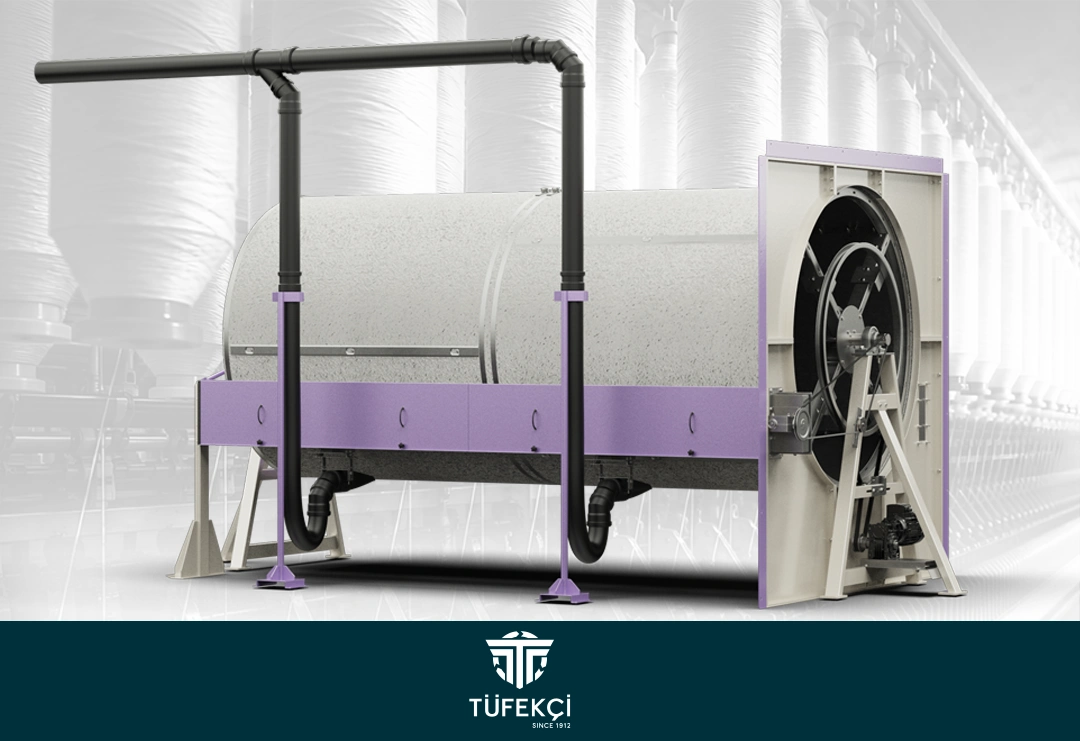
Packaged Rotary Filter Unit: Continuous Filtration Under Heavy Fiber Load
Fiber preparation and yarn production halls generate far more airborne material than a static filter surface can absorb between cleaning intervals. The rotary filter unit answers that problem with a filter drum that cleans itself while the system keeps running.
As the drum turns, the collected fiber layer is stripped from the surface and carried away, so the effective filter area never shrinks. Airflow stays stable, pressure loss stays within its design range, and the fans behind the unit do not have to fight a gradually blocking surface.
This is the unit to look at when air volumes are high and the fiber load is constant rather than occasional. It performs well in central filtration lines serving several machine groups at once, and it holds its separation efficiency at flow rates where simpler systems would need frequent manual attention.
Everything sits inside one integrated body: drive, drum, casing and cleaning mechanism. Installation is a matter of positioning, connecting and commissioning, and the same compact layout keeps service access straightforward. Plants running larger central systems often combine it with a construction-type rotary filter elsewhere in the line.
Packaged Mechanical Filter Unit: Reliable Separation at Medium Density
Not every production area needs continuous automatic cleaning. Where the dust and fiber density sits at a moderate level, mechanical filtration gives dependable results with a simpler set of moving parts and a lower maintenance burden.
This unit separates particles by physically holding them on purpose-built filter surfaces as the air passes through. The design keeps airflow steady across the working cycle, and the filter modules are made to be replaced quickly when they reach the end of their service life.
Weaving halls, knitting sections and fiber preparation areas with a balanced load are its natural home. It is also a common choice for industrial ventilation lines where clean air matters but the incoming particle volume does not justify a rotary system.
Fewer active components mean fewer things to schedule, inspect and stock spares for. For plants that value predictable, low-effort operation over maximum capacity, that trade is usually the right one.
Package-Type or Construction-Type: Making the Right Call
The decision comes down to space, timing and scale. Package-type units are delivered as finished equipment and go into service quickly, while construction-type systems are built into the facility and can be shaped around unusual layouts or very large volumes.
If you are adding capacity to a running plant, replacing aging equipment, or working with a limited technical room, the packaged approach is generally faster and less disruptive. A new greenfield mill with high air volumes across multiple halls may still be better served by a full construction-type installation.
Budget behaves differently in each case as well. Packaged units carry a known cost with fewer site variables, since assembly, testing and quality control happen at the factory rather than on your floor.
Many facilities end up running both. A construction-type central system handles the main load while packaged units cover specific halls, expansions or lines added later. The full package-type product range is designed to work alongside existing equipment rather than replace it.
Where These Units Fit in the Production Line
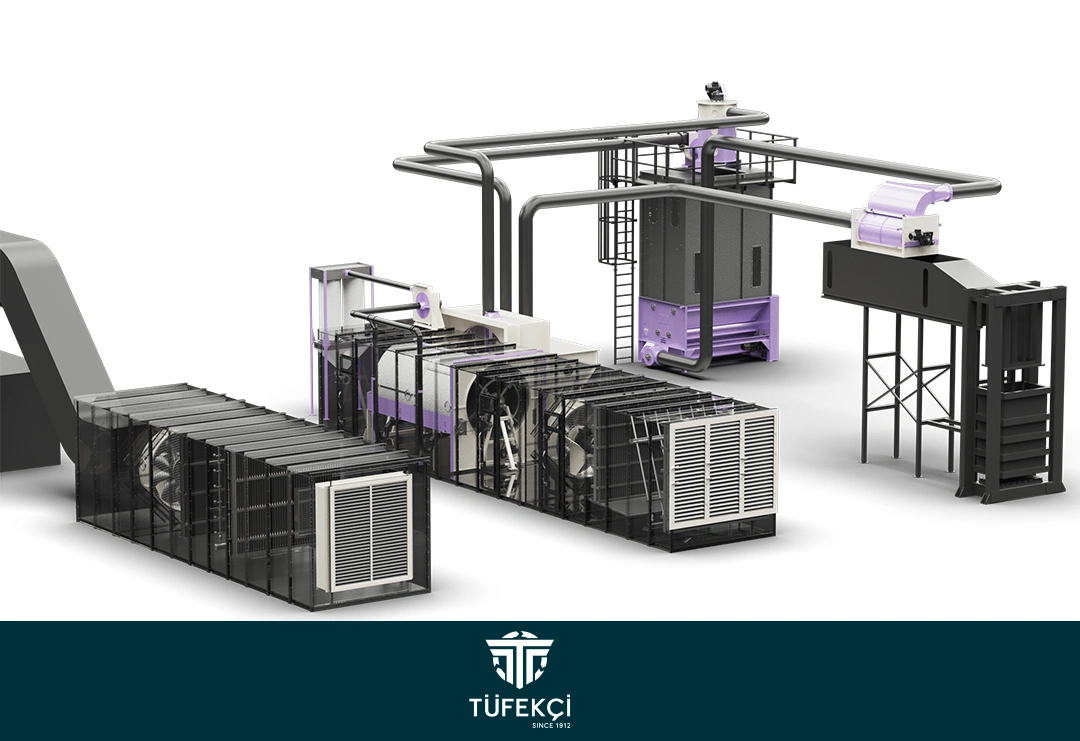
A collection unit rarely works alone. It sits inside a chain that starts at the machine and ends with baled or stored fiber waste, and the surrounding equipment shapes how well it performs.
Common points of use and connection include:
- Ring spinning, open-end and fiber preparation halls with continuous fly generation
- Weaving and knitting sections where lint settles on machines and product
- Central ventilation and return air lines serving multiple machine groups
- Air conditioning intakes protected by a downstream packaged air handling unit
- Waste transfer lines feeding a compactor or briquetting machine
- Storage points where collected material is held in a silo before removal
Fan selection on the transport side deserves the same attention as the filter itself. Undersized air movement starves the unit, while oversized flow wastes energy for no gain in separation quality.
Control, Monitoring and Long-Term Operation
A filtration unit is only as good as the information you have about it. Pressure readings, drive status and cleaning cycles all tell you when performance is drifting, well before anyone on the floor notices dust settling again.
Packaged units integrate into central control through panels and monitoring systems, so filter condition and running data appear alongside the rest of your plant. Facilities already using SCADA systems can bring these units into the same screen and alarm structure without extra layers.
Routine care stays simple: check the filter surfaces on schedule, keep the waste transfer path clear, and replace modules before pressure loss climbs. Original spare parts and planned service visits protect the performance you paid for.
In short, the right packaged unit is the one matched to your actual dust load, air volume and available space. If you share your hall layout and production data, our engineering team can size the system and prepare a quotation built around it, or you can reach us directly to discuss the details.
